How Insurance Software Helps Reduce Manual Work
Understanding how insurance software helps reduce manual work is essential for modern firms aiming to increase efficiency and lower operational costs. By automating repetitive tasks, companies can shift their focus from tedious data entry to high-value client interactions. This transition not only speeds up internal workflows but also minimizes the human errors that often plague paper-based or legacy systems.
Whether you are an independent agency or a large carrier, integrating digital tools is no longer optional for staying competitive in a fast-paced market. This article explores the specific ways technology transforms insurance operations and provides actionable insights for your digital transformation journey.
Automating Data Entry and Document Management
The most immediate benefit of modern insurance software is the radical reduction in manual data entry. Historically, staff spent hours transcribing information from physical application forms into digital systems.
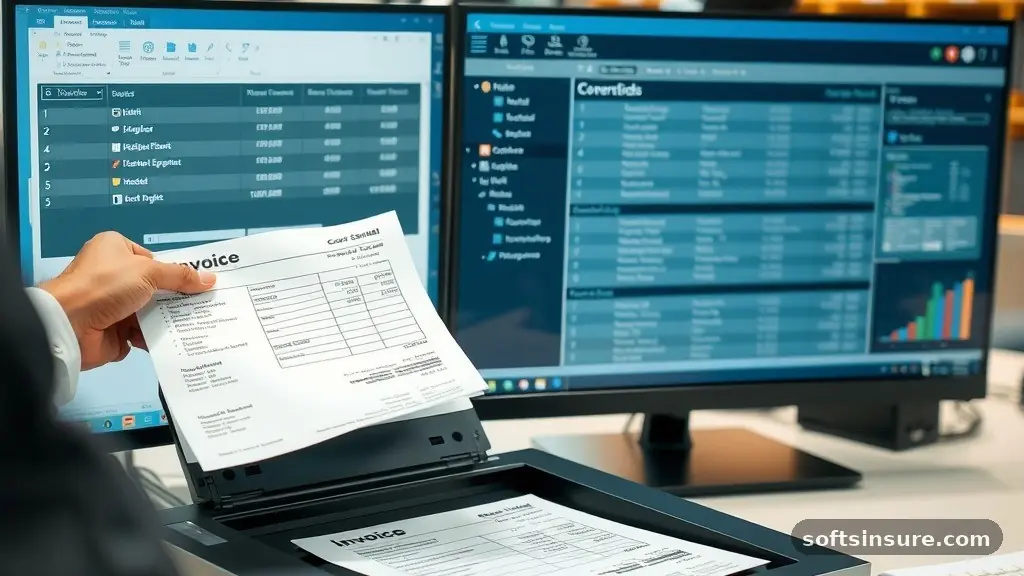
With today’s intelligent character recognition (ICR) and optical character recognition (OCR) technologies, the software extracts data directly from scanned documents or digital attachments. This shift ensures that information flows into the policy administration system without a single keystroke from an employee.
Beyond simple extraction, software platforms categorize documents automatically. When a customer submits a claim, the system identifies the document type, such as a police report or a medical invoice, and routes it to the appropriate folder.
This eliminates the need for manual sorting and physical filing cabinets. By digitizing the document lifecycle, firms can access information instantly, which significantly reduces the time spent searching for misplaced paperwork.
Streamlining the Claims Processing Cycle
Claims processing is often the most labor-intensive part of the insurance business. How insurance software helps reduce manual work becomes evident when you look at automated triaging systems.
Instead of a claims adjuster manually reviewing every incoming notice, the software evaluates the initial report against pre-set business rules. Minor, low-risk claims can be automatically approved or sent for fast-track processing, freeing up adjusters for complex cases.
This automation also extends to communication with the policyholder. Software can trigger automated updates at every stage of the claim, from initial receipt to final payout.
This transparency reduces the volume of inbound status-check calls, which typically consume a significant portion of an adjuster’s day. By providing real-time updates through a secure portal, the software empowers customers while simultaneously lowering the administrative burden on the staff.
Enhancing Policy Lifecycle Management
Managing a policy from inception to renewal involves dozens of touchpoints that were traditionally handled manually. Modern systems automate the entire lifecycle, including underwriting, policy issuance, and mid-term endorsements.
When a policy is nearing its renewal date, the system automatically generates the necessary documentation and sends it to the customer. This proactive approach prevents gaps in coverage and reduces the rush that often occurs at the end of a policy term.
Underwriting, in particular, benefits from automated risk assessment tools. By pulling data from external sources—such as credit bureaus, loss history databases, or even public property records—the software provides an instant risk profile.
This allows underwriters to focus on outliers rather than manually verifying every standard application. The result is a faster turnaround time for customers and a more consistent application of risk management standards across the firm.
Improving Customer Interaction and Self-Service
Self-service portals are a primary example of how insurance software helps reduce manual work by shifting simple tasks to the end-user. Today’s customers expect the ability to update their personal information, request certificates of insurance, or make premium payments online.
When a customer performs these tasks themselves, the back-office staff is spared from processing these requests manually. This creates a win-win scenario where the customer gains convenience and the firm gains operational capacity.
The integration of chatbots and virtual assistants further lightens the load. These tools handle routine inquiries—such as asking about a deductible or finding a local repair shop—without requiring human intervention.
By deploying these digital agents, firms ensure that support is available 24/7. This reduces the pressure on call center staff, who can then dedicate their time to resolving complex problems that truly require human empathy and judgment.
Comparing Traditional vs. Automated Workflows
To truly grasp the efficiency gains, it is helpful to compare the time investment required for common tasks before and after the implementation of specialized software. The following table highlights the difference in effort for standard operational activities.
| Task | Traditional Manual Process | Automated Software Process |
|---|---|---|
| Data Entry | 15–30 minutes per application | Under 1 minute (OCR-assisted) |
| Document Filing | 5–10 minutes per file | Automatic indexing (seconds) |
| Renewal Notices | Manual drafting and mailing | Automated triggers and delivery |
| Claim Status Updates | Email/Phone back-and-forth | Automated notifications |
Standardizing Compliance and Reporting
Compliance is a major area where manual oversight can lead to expensive errors. Insurance software helps reduce manual work by baking regulatory requirements directly into the system architecture.
Instead of manually reviewing each policy to ensure it meets state-specific mandates, the software applies these rules automatically. If a policy document is missing a required disclosure or contains an outdated clause, the system flags the error before the document is ever issued.
Reporting is another area that sees massive improvements through automation. Generating monthly, quarterly, or annual reports used to require hours of manual data aggregation from disparate spreadsheets.
Modern systems offer real-time dashboards that pull data from across the organization. This ensures that leadership has access to accurate, up-to-date information without requiring a dedicated analyst to spend days preparing a single report.
Integration Across Legacy Systems
One of the biggest hurdles for insurance companies is the existence of legacy systems that don’t talk to each other. How insurance software helps reduce manual work often depends on its ability to act as a bridge between these disparate platforms.
Modern APIs (Application Programming Interfaces) allow new software to extract data from older databases, ensuring that information remains synchronized throughout the enterprise. This capability prevents the “swivel-chair” effect, where an employee must manually copy data from one screen to another.
By creating a unified view of the customer, these systems enable more efficient decision-making. When an agent has access to a policyholder’s entire history—claims, billing, and communication logs—in one location, they no longer need to check multiple departments.
This central source of truth significantly reduces the time spent on internal communication and administrative coordination. For more on the standards governing these digital interactions, visit the National Association of Insurance Commissioners website for regulatory guidance.
Key Benefits of Digital Transformation
Adopting these technologies provides a competitive edge that goes beyond just saving time. While the reduction of manual labor is the primary goal, the secondary benefits are equally impactful for long-term growth. Below are the most significant advantages firms experience after moving away from manual, paper-heavy workflows:
- Reduced Operational Costs: Lowering the time spent on administrative tasks directly cuts overhead.
- Enhanced Accuracy: Automated data entry eliminates the risk of human error in policy documents.
- Increased Scalability: Software allows firms to handle more policies without needing to hire additional administrative staff.
- Better Employee Satisfaction: Staff members can focus on high-level analysis rather than repetitive data entry.
- Improved Customer Loyalty: Faster response times and self-service options lead to higher retention rates.
Frequently Asked Questions
What is the most common manual task in insurance?
Data entry is consistently ranked as the most time-consuming manual task in the insurance industry. This includes entering information from paper applications, re-keying data from emails, and manually updating policy records across different systems.
How do insurance companies manage legacy data?
Most companies use middleware or API-driven software platforms to bridge the gap between old and new systems. This allows them to extract and normalize legacy data without the need for a total system overhaul.
Does automation replace insurance agents?
No, automation is designed to augment human work, not replace it. By handling routine administrative tasks, software allows agents to focus on complex risk assessment, relationship management, and providing professional advice.
How long does it take to implement these systems?
Implementation timelines vary based on the size of the company and the complexity of existing systems. A small agency might go live in a few weeks, while large carriers may take several months to migrate data and train staff.
Is it expensive to automate insurance operations?
While there is an upfront investment in software licensing and training, the long-term return on investment is typically high. Most firms find that the cost is offset by significant savings in labor and a reduction in errors within the first year or two.
Conclusion
The transition toward automated systems is fundamentally changing how insurance professionals approach their daily responsibilities. By understanding how insurance software helps reduce manual work, agencies can identify the specific bottlenecks that hinder their productivity and growth. Whether it is through automated document processing, self-service customer portals, or integrated reporting, technology provides the tools needed to modernize the entire insurance value chain.
The next step for any firm is to conduct a thorough audit of current workflows to identify where manual labor is most concentrated. Starting with one area—such as claims processing or renewals—can provide immediate relief and demonstrate the value of digital adoption to the entire team. As you continue to refine these processes, you will find that your business becomes more agile, accurate, and better prepared to serve the evolving needs of your customers.