
Insurance Software Applications for Modern Agencies
Insurance software applications for modern agencies serve as the central nervous system for daily operations, transforming how brokers and agents manage their books of business. By integrating core workflows into a unified digital environment, these tools allow teams to move away from fragmented spreadsheets and manual record-keeping.
You will gain a deeper understanding of how these platforms streamline client communication, automate compliance, and ultimately drive profitability for your firm. Choosing the right technology is no longer an optional upgrade; it is a critical requirement for staying competitive in a rapidly digitizing market.
Core Functions of Agency Management Systems
The foundation of any successful digital transformation in the sector is the Agency Management System (AMS). This software functions as a comprehensive database where every customer interaction, policy detail, and premium payment is stored. By centralizing this information, agents can access a 360-degree view of their clients without jumping between different windows or physical filing cabinets.
Modern systems often include automated workflows that trigger task reminders, such as renewal notifications or follow-ups on unpaid premiums. These automations reduce the administrative burden on staff, allowing them to focus on high-value activities like relationship building and complex risk assessment. When an agent knows exactly when a policy is due, they can provide proactive service that builds long-term loyalty.
Integration is perhaps the most significant advantage of these platforms. A truly effective setup connects with carrier portals, allowing for real-time rating and policy downloads directly into the agency’s system. This eliminates redundant data entry, which is a notorious source of human error and lost time in insurance offices.
CRM Integration for Relationship Management
While an AMS handles the transactional side of the business, a Customer Relationship Management (CRM) tool focuses on the life cycle of the client. Many modern insurance software applications for modern agencies now combine these features, or offer deep integrations that share data between the two. This ensures that every team member, from sales to claims support, sees the same history of communication.
Effective CRM usage involves tracking touchpoints, from the initial lead capture to post-sale support. By recording every phone call, email, and meeting, the agency creates a valuable repository of institutional knowledge. If a key producer leaves the firm, their successor can pick up exactly where they left off without the client feeling a lapse in service.
Segmentation is another powerful feature of these platforms. Agencies can categorize their clients based on specific criteria, such as industry, policy type, or renewal date.
This allows for targeted marketing campaigns that feel personal rather than generic. For instance, sending a tailored update about cyber risk to a specific subset of commercial clients is far more effective than a mass email blast.
The Role of Data Analytics in Decision Making
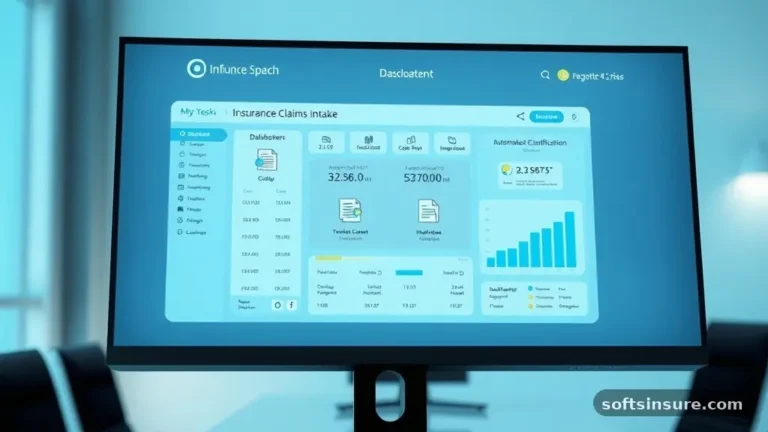
Data is often the most underutilized asset in an insurance office. Modern software platforms provide dashboards that visualize key performance indicators, such as loss ratios, commission income, and customer retention rates. Having these metrics at your fingertips allows for evidence-based decision-making rather than relying on gut feeling.
Management can identify which lines of business are most profitable and which are costing the agency more in administrative overhead than they generate in revenue. This insight can shift the firm’s focus toward niche markets where they have a competitive advantage. It also helps in identifying underperforming producers who may need additional training or support.
Predictive analytics is the next frontier for many agencies. By using historical data, these applications can forecast future trends, such as the likelihood of a client churning before their next renewal. Acting on these predictions allows agencies to implement retention strategies before a client ever considers moving to a competitor.
Table: Key Features Comparison
| Feature Category | Basic Software | Advanced Agency Platform |
|---|---|---|
| Data Storage | Local Files | Cloud-Based Encryption |
| Client Access | Email Only | Integrated Client Portal |
| Automation | Manual Triggers | AI-Driven Workflows |
| Reporting | Static PDFs | Real-Time Dashboards |
| Integrations | Limited | API-Based Ecosystem |
Cloud Computing and Security Considerations
Transitioning to cloud-based insurance software applications for modern agencies has fundamentally changed how firms operate. Remote work is now a standard expectation, and cloud platforms provide the flexibility for agents to access files from anywhere with an internet connection. This scalability allows firms to grow their headcount without needing to invest in expensive on-site server infrastructure.
Security remains the top priority for any agency dealing with sensitive personal and financial information. Reputable vendors invest heavily in compliance, ensuring their platforms meet standards like SOC 2 or HIPAA, where applicable. When evaluating a potential provider, you must confirm they use end-to-end encryption and multi-factor authentication.
The National Conference of State Legislatures provides extensive resources on state-level data security requirements that agencies must navigate. Regular backups and disaster recovery protocols are also non-negotiable features of a professional-grade platform. You should never assume that data stored in the cloud is automatically safe without verifying the vendor’s specific security commitments.
Communication Tools and Client Portals
Modern agencies are expected to provide a digital experience similar to what consumers get from their banks. Client portals are a key component of this, allowing policyholders to view their documents, request certificates of insurance, and report claims on their own schedule. This self-service model reduces the volume of routine inquiries coming into the office.
Secure messaging platforms also play a vital role. Sending sensitive policy documents via standard email is increasingly seen as a security risk. Integrated secure messaging allows for the encrypted exchange of files, ensuring that both the agency and the client are protected.
These tools also enhance the brand image. A firm that provides a polished, user-friendly digital interface projects professionalism and reliability. In a crowded marketplace, the ease of interaction often becomes a deciding factor for clients choosing between similar insurance offerings.
Automation of Routine Administrative Tasks
Administrative overhead can quickly eat away at an agency’s margins. Automation tools within insurance software applications for modern agencies allow firms to offload repetitive tasks to the system. This includes automated billing reminders, policy issuance notifications, and even basic data entry tasks.
Consider the time spent on certificates of insurance for commercial clients. Manually generating these documents is a slow, error-prone process. Modern platforms can automate the creation and delivery of these certificates, often triggered by a request through the client portal.
Workflow automation also ensures that no client falls through the cracks. If an agent sets a task for a follow-up call, the system can escalate that task to a manager if it isn’t completed within a set timeframe. This creates an internal accountability loop that improves overall service quality and consistency across the team.
Selecting the Right Software Vendor
Choosing the correct platform is a long-term commitment that requires careful vetting. You should start by defining your agency’s specific needs, such as the mix of personal lines versus commercial lines. Some software is optimized for high-volume personal lines, while others excel at handling complex commercial accounts with multiple carriers.
Vendor support is as important as the software features themselves. During your evaluation process, ask about their onboarding timeline and the availability of technical support. A platform that is technically superior but lacks a responsive support team will eventually become a bottleneck for your business.
It is also wise to speak with other agencies currently using the software. Ask them about the “hidden” costs, such as setup fees, training costs, or the price of adding new modules later. Transparency in pricing and a clear roadmap for future updates are strong indicators of a healthy, reliable vendor.
Future Trends in Insurance Technology
The landscape of insurance software applications for modern agencies is evolving toward deeper integration with artificial intelligence. Machine learning algorithms are already being used to analyze policy language and identify coverage gaps. In the near future, we will likely see more automated underwriting assistance, where the software suggests the best carrier and coverage options based on the client’s profile.
Voice-to-text and natural language processing are also becoming more prevalent. These features can automatically transcribe client calls and log the key details into the CRM, saving agents hours of manual note-taking every week. As these technologies mature, they will become standard expectations rather than “nice-to-have” features.
Agencies that fail to adopt these innovations will find it increasingly difficult to compete on price or service. The goal is not to replace the human element of insurance, but to empower agents to be more effective. By automating the mundane, you free up your team to focus on the complex human problems that require empathy, judgment, and expertise.
Frequently Asked Questions
What is the most important feature to look for in insurance software?
The most important feature is the ability to integrate with your existing carriers and accounting software. A standalone system that does not talk to your other tools will eventually become a data silo, forcing your team to perform manual entry that wastes time and introduces errors.
How do I know if my agency is ready to switch to a new platform?
You are likely ready if your team spends more than 20% of their day on manual data entry or if you have difficulty generating accurate reports on your agency’s performance. When your current tools prevent you from scaling your client base, it is time to upgrade.
Are cloud-based systems safe for storing sensitive client data?
Yes, provided the vendor adheres to industry-standard security protocols like SOC 2 compliance and offers multi-factor authentication. Reputable cloud providers typically have more robust security measures than most individual agencies can afford to maintain on their own local servers.
How long does it usually take to migrate to a new system?
The migration process typically takes between three to six months, depending on the size of your agency and the complexity of your data. Success depends heavily on the quality of your current data and the commitment of your team to learn the new platform during the transition.
Can small agencies afford enterprise-grade software?
Many modern providers offer tiered pricing that allows smaller agencies to access core features without paying for modules they do not need. It is often more cost-effective to invest in a scalable platform early on than to migrate multiple times as your agency grows.
Conclusion
Adopting the right insurance software applications for modern agencies is a strategic move that pays dividends in both efficiency and client satisfaction. By embracing centralized data management, automated workflows, and robust analytical tools, your firm can operate with the precision of a much larger organization. The transition requires a clear plan, team training, and a focus on long-term goals rather than short-term convenience.
Start by auditing your current manual processes to identify the biggest bottlenecks in your daily operations. Once you have a clear picture of your needs, engage with vendors who prioritize security, integration, and user experience. Investing in technology today ensures that your agency remains resilient, agile, and ready to meet the changing demands of your clients in the years ahead.